IPTV Multi Connection : How to Share Accounts Effectively
Introduction
Television has always been a central part of family entertainment. From black-and-white TV sets to cable and now streaming platforms, the way we watch content has changed dramatically. The latest transformation is powered by IPTV (Internet Protocol Television)—a technology that streams live channels, on-demand movies, and sports directly through the internet.
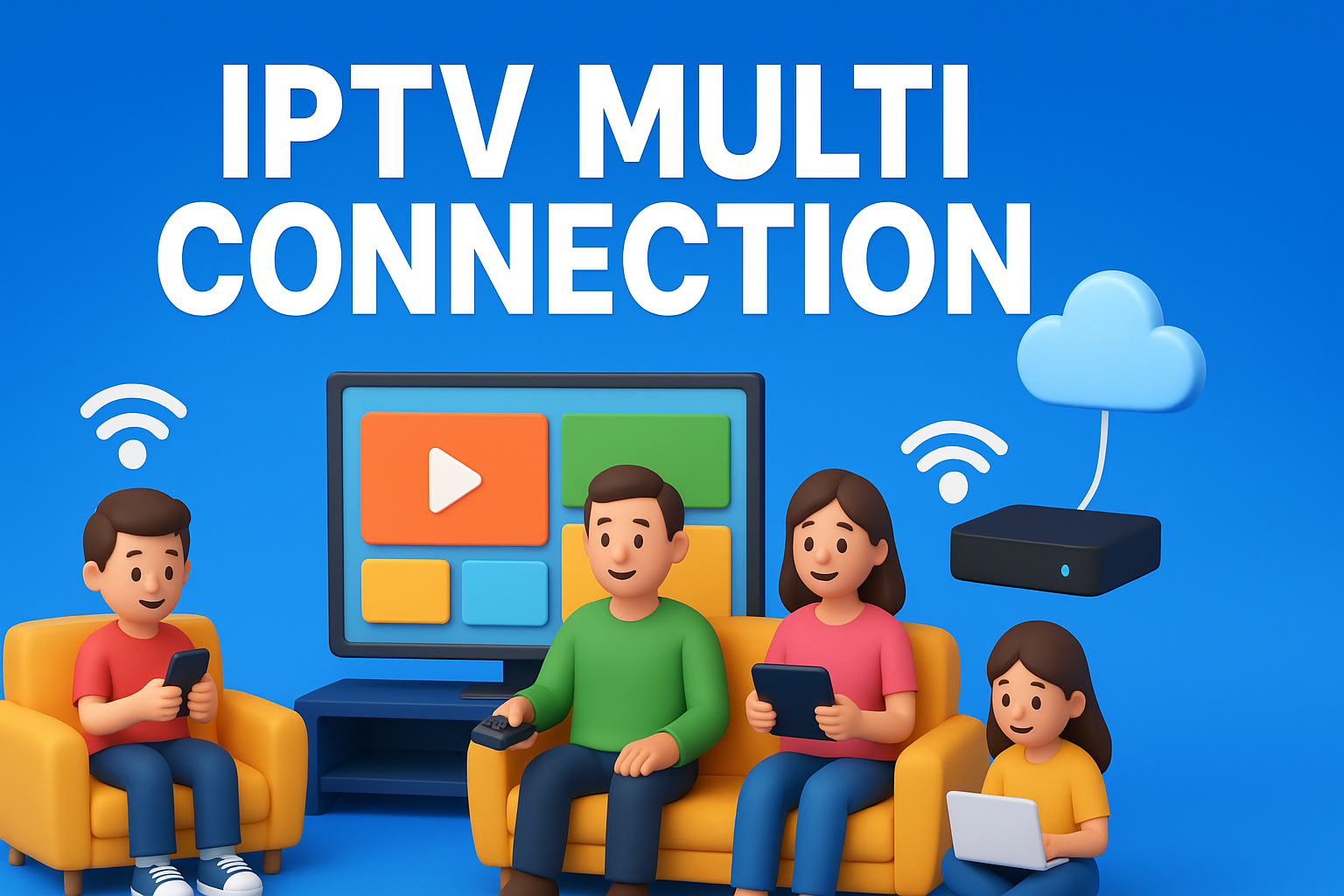
Now, imagine this: Dad is in the living room watching live football, Mom is in the kitchen catching up on her favorite soap opera, the kids are in their room watching cartoons, and a teenager is binge-watching a Netflix-style series on their tablet. Traditionally, this would require separate cable boxes or subscriptions. But with IPTV Multi Connection, all of this is possible under one single subscription.
That’s why more families, roommates, and even small businesses are turning to IPTV family plans that support multiple devices. This flexibility not only saves money but also ensures that everyone gets to watch what they love, when they want, without arguments over the remote control.
In this guide, we’ll explore everything you need to know about IPTV Multi Connections—what it is, why it matters, the technical requirements, best providers, setup tips, and how to optimize your streaming experience. By the end, you’ll know exactly why IPTV with multiple connections is the future of home entertainment.
What is IPTV?
IPTV stands for Internet Protocol Television, a system that delivers television content using the internet instead of traditional cable or satellite signals. With IPTV, you’re no longer tied to cable providers or expensive packages. Instead, you get the freedom to stream thousands of live TV channels, on-demand movies, sports events, and series from around the world.
Why IPTV is Different from Cable or Satellite
-
Cable/Satellite → Channels are broadcasted to everyone at the same time, and you need a cable box or dish.
-
IPTV → Streams content individually to your device, giving you more control.
Think of it like the difference between eating at a fixed buffet (cable) and ordering exactly what you want from a menu (IPTV).
Types of IPTV Services
-
Live TV Streaming – Watch channels in real time (sports, news, entertainment).
-
Video on Demand (VOD) – Access a library of movies and TV shows at any time.
-
Catch-up TV – Rewind or replay shows you missed.
In short, IPTV gives you freedom, variety, and flexibility—something cable never truly offered.
Why Multi Connections Matter
In today’s world, a single screen is never enough. Families and even individuals want flexibility across multiple devices. Here’s why multi connections are becoming a must-have:
For Families
-
Dad wants to watch football.
-
Mom wants her drama series.
-
Kids want cartoons or animated movies.
Without multi-connection support, only one person could watch at a time—or worse, everyone would fight for the remote.
For Roommates or Shared Homes
If you live with friends, it’s unlikely you’ll all want to watch the same thing. A multi-connection IPTV plan ensures everyone gets their own screen.
For Travelers
Some IPTV providers allow you to log in from different locations. For example, you could be streaming on your phone while traveling while your family watches at home.
In short, IPTV Multi Connection = peace at home + cost savings + personal freedom.
Understanding IPTV Technology
To understand multi connections, it helps to know how IPTV works. Instead of relying on satellites, IPTV sends data in small chunks (called packets) over your internet connection. These packets carry live TV signals, movies, or recorded shows and play them instantly on your device.
How IPTV Works Step-by-Step
-
IPTV provider receives TV content.
-
They encode and store it on their servers.
-
When you click “play,” the server sends that content through the internet.
-
Your device decodes it and plays it instantly.
Key Features that Support Multi Connections
-
Adaptive Streaming – Adjusts video quality based on internet speed, preventing buffering.
-
Cross-Device Compatibility – Works on smart TVs, Firestick, Android, iOS, and even laptops.
-
Cloud Technology – Multiple streams can be handled at once without interruption.
In simple terms, IPTV technology is designed for flexibility, which is why it works so well for families needing multiple connections.
Benefits of IPTV Multi-Connection
A multi-connection IPTV plan offers several major benefits that go far beyond just convenience.
1. Cost Savings
Instead of paying for multiple subscriptions, one IPTV plan with 3–5 connections is enough for the whole family. This can save hundreds of dollars per year compared to cable or multiple streaming apps.
2. Simultaneous Streaming
Everyone can watch what they love at the same time. No interruptions, no waiting.
3. Vast Content Library
With thousands of live channels and VOD options, IPTV ensures there’s something for everyone.
4. Global Access
Traveling? Living abroad? With IPTV, you can still watch channels from your home country.
👉 Example: A family in Canada with roots in Mexico can watch Canadian sports channels + Mexican novelas on different devices simultaneously.
How IPTV Multi-Connection Works
At its core, IPTV multi connection means that one account supports multiple simultaneous streams.
Account Sharing
Most IPTV providers offer 2–5 device connections per account. That means you can log in with the same username/password on different devices.
Internet Requirements
The more connections you use, the more internet speed you’ll need.
-
1 Device: 10 Mbps minimum
-
3 Devices: 25 Mbps
-
5 Devices: 40–50 Mbps
Device Setup
-
Subscribe to a multi-connection plan.
-
Install the IPTV app on your devices.
-
Log in with your credentials.
-
Enjoy streaming on multiple devices at once.
This mak
Technical Requirements for Smooth Streaming
A multi-connection IPTV plan is only as good as your internet and devices. If your setup is weak, you’ll face buffering, lags, or login conflicts. Here’s what you need for smooth streaming:
Internet Speed Requirements
The golden rule: 10 Mbps per device for HD, and 20 Mbps per device for 4K content.
| Devices Streaming | Minimum Speed (HD) | Recommended Speed (4K) |
|---|---|---|
| 1 Device | 10 Mbps | 20 Mbps |
| 3 Devices | 25 Mbps | 50 Mbps |
| 5 Devices | 40–50 Mbps | 100 Mbps+ |
👉 Pro Tip: Always aim for higher bandwidth than you think you’ll need. If kids are gaming or others are downloading, IPTV may lag if the internet speed is too low.
Compatible Devices
IPTV multi connections work on almost all modern devices:
-
Smart TVs (Samsung, LG, Android TV)
-
Streaming Devices (Amazon Firestick, Roku, Apple TV)
-
Smartphones & Tablets (iOS and Android)
-
PCs & Laptops
-
MAG boxes / IPTV boxes
Router & WiFi Optimization
-
Use a dual-band router (2.4 GHz + 5 GHz) for faster WiFi.
-
Place your router in a central location.
-
Use wired Ethernet for your main TV to avoid buffering.
If you plan to use IPTV on 4–5 devices simultaneously, invest in a high-speed fiber internet plan (100 Mbps or more).
Step-by-Step Setup for Multi Connections
Setting up IPTV for multiple devices may sound technical, but it’s actually very straightforward.
Step 1: Choose a Reliable Provider
Not all providers allow multiple connections. For example:
-
BestUSAIPTV – Up to 2 connections
-
IPTV Smarters – Up to 4 connections
-
Xtream Codes – Up to 5 connections
Step 2: Select a Multi-Connection Plan
Instead of a single device subscription, choose family or premium plans that support 3–5 devices.
Step 3: Install IPTV Apps
-
For Firestick → Use Downloader app to install IPTV Smarters or Tivimate.
-
For Android/iOS → Download apps from Google Play Store or App Store.
-
For Smart TVs → Search for IPTV apps in your TV’s app store.
Step 4: Enter Login Details
Providers usually give you an M3U link or Xtream Codes (username, password, server URL).
Step 5: Test Multiple Devices
Log in on different devices and check simultaneous playback. Example: Watch sports on the TV while streaming a movie on your phone.
👉 Within 10 minutes, your entire family can be enjoying IPTV on multiple devices without conflicts.
Common Problems & Fixes
Even the best IPTV providers may face issues if your setup isn’t optimized. Here are common problems and their solutions:
Problem 1: Buffering
-
Cause: Slow internet or overloaded WiFi.
-
Fix: Use a wired connection, upgrade internet speed, or lower stream quality.
Problem 2: Login Conflicts
-
Cause: Exceeding connection limits (e.g., trying to use 6 devices on a 5-device plan).
-
Fix: Upgrade plan or log out from unused devices.
Problem 3: Playback Errors
-
Cause: Outdated IPTV app or server issues.
-
Fix: Update app, clear cache, or restart device.
Problem 4: Device Not Supported
-
Cause: Old or incompatible devices.
-
Fix: Use Android boxes, Firestick, or Smart TVs with updated OS.
👉 90% of issues are solved by checking internet speed, restarting the router, and updating the app.
Best IPTV Providers for Families & Households
Not all IPTV services are created equal. If you want multi-connection support, you need providers that are reliable, affordable, and family-friendly. Here are the top ones:
1. Best USA IPTV

-
Best For: Families needing up to 5 connections
-
Price: $6.95 trial, affordable monthly plans
-
Highlights: HD & 4K channels, fast setup, global content
2. IPTV Smarters

-
Best For: Easy app interface and 4 simultaneous devices
-
Price: Around $8.99/month
-
Highlights: User-friendly app, supports multiple formats
3. Xtream Codes

-
Best For: Reliable multi-device streaming (up to 5 connections)
-
Price: $7.50/month
-
Highlights: Supports EPG (TV guide), stable servers
4. Tivimate (App Only)
-
Best For: Customizable IPTV interface (requires subscription provider separately)
-
Price: $5 one-time app purchase
-
Highlights: Excellent for Android TV and Firestick users
👉 If you want the best all-in-one choice, Best USA IPTV stands out due to its affordability, reliability, and strong multi-connection support.
Comparing IPTV Providers
Here’s a side-by-side comparison of the top IPTV services with multi connections:
| Provider | Max Connections | Price/Month | Free Trial | Best Feature |
|---|---|---|---|---|
| Best USA IPTV | 5 | $7.99 | Yes | Affordable family plan |
| IPTV Smarters | 4 | $8.99 | Yes | Easy-to-use interface |
| Xtream Codes | 5 | $7.50 | No | Stable, reliable |
| Tivimate | Depends on provider | $5 app + plan | No | Customizable player |
👉 Recommendation: If you’re looking for value + multiple device support, Best USA IPTV is the best option for most households.
Managing Your IPTV Account Across Devices
Having a multi-connection IPTV plan is great, but you need to manage it properly so you don’t run into issues.
Tracking Active Connections
Most IPTV providers have a dashboard where you can see which devices are connected.
-
Why it matters: If you exceed the limit, streams may stop.
-
Tip: Regularly log out from old or unused devices.
Example: If your family has 5 slots but your cousin logs in with your details, someone at home may get blocked. Always keep track of active users.
Creating User Profiles
Some providers allow multiple profiles, like Netflix.
-
Parents can set up one profile with sports and news.
-
Kids can have one with cartoons and family movies.
-
Teens can enjoy music channels and series.
👉 This makes it easier to organize and prevents content mix-ups.
Security Tips for Shared IPTV Accounts
Sharing IPTV is convenient, but it comes with risks. Hackers or unauthorized users can steal your credentials.
Use Strong Passwords
-
Combine uppercase, lowercase, numbers, and symbols.
-
Avoid simple passwords like 12345 or password.
Change Password Regularly
Every 2–3 months, update your password to keep your account secure.
Use a VPN
A Virtual Private Network masks your IP address.
-
Benefit: Prevents ISP throttling and increases privacy.
-
Tip: Choose a VPN with fast streaming support (e.g., ExpressVPN, NordVPN).
👉 Security is not just about protecting your subscription — it’s also about keeping your personal data safe.
Optimizing IPTV Performance
A smooth IPTV experience depends on both hardware and internet optimization.
Enhancing Streaming Quality
-
For HD: 10 Mbps per device.
-
For 4K: 20–25 Mbps per device.
-
Use wired Ethernet for main TV for stable streaming.
Managing Bandwidth
If multiple users are online, streaming can slow down.
-
Use Quality of Service (QoS) on your router to prioritize IPTV traffic.
-
Schedule downloads or updates outside streaming hours.
Device Settings
-
Reduce resolution if internet is slow.
-
Clear app cache regularly.
-
Update apps and device firmware.
👉 Example: If dad is watching sports in 4K, the kids can set cartoons to HD. This balances quality without lag.
Troubleshooting Multi-Connection Issues
Even with the best IPTV setup, you may face technical hiccups.
Connectivity Problems
-
Cause: Weak WiFi or ISP outage.
-
Fix: Restart router, check speed, switch to wired connection.
Playback Errors
-
Cause: Outdated app or corrupted cache.
-
Fix: Update app, clear cache, reinstall if needed.
Exceeded Connections
-
Cause: More devices logged in than allowed.
-
Fix: Log out of unused devices or upgrade your plan.
Lag During Peak Hours
-
Cause: ISP throttling.
-
Fix: Use a VPN to bypass speed restrictions.
👉 Keep a checklist handy: Restart > Update > Check Internet > Contact Support. 80% of issues are solved this way.
Legal Aspects of IPTV Multi Connections
Before you share accounts, it’s important to understand the legal side.
Copyright Considerations
-
IPTV providers need broadcasting rights.
-
Using unlicensed providers may lead to account suspension or legal issues.
Provider Terms of Service
Always read your provider’s rules. Some allow family sharing, others don’t.
-
Best USA IPTV: Up to 5 connections allowed.
-
IPTV Smarters: Limited to 4 connections.
-
Others: May block accounts if sharing exceeds limits.
Safe Choice
Stick to providers that clearly offer family or multi-device plans. This way, you’re not breaking terms or risking service interruptions.
👉 Bottom line: Multi-connection IPTV is legal as long as you stay within provider limits and use authorized services.
The Future of IPTV Multi Connections
IPTV technology is evolving fast. With more households demanding flexible viewing, providers are enhancing multi-connection capabilities.
Trends to Watch
-
4K and 8K Streaming – Higher-quality content will become standard.
-
AI-Powered Recommendations – Personalized content suggestions for every family member.
-
Smart Home Integration – Watch IPTV on smart displays, fridges, and even voice-controlled devices.
-
Cloud DVR & Storage – Record shows across multiple devices without using device memory.
-
Expanded Device Support – From smartphones to wearable devices and VR headsets.
Predictions for User Accessibility
-
Families will enjoy even more simultaneous streams per account.
-
Providers may offer custom family profiles for better content organization.
-
International streaming will grow, making it easy to access channels from different countries legally.
👉 IPTV is set to replace traditional cable for most households in the next 5–10 years, thanks to its flexibility, affordability, and ease of use.
Conclusion: Maximizing Your IPTV Multi Connection Experience
IPTV multi connections are a game-changer for families, roommates, and shared households. One subscription can power multiple devices at once, saving money and providing entertainment flexibility for everyone.
Tips to Make the Most of IPTV
-
Choose a reliable provider like best USA IPTV.
-
Opt for a family plan with 3–5 connections.
-
Ensure fast and stable internet for uninterrupted HD or 4K streaming.
-
Regularly manage devices and account security.
-
Keep apps and devices updated to avoid technical issues.
By following these steps, you can enjoy a seamless IPTV experience where everyone watches what they love, anytime, on any device.
💡 Don’t forget: you can try 1 full month of premium streaming for just $7.99 at Best USA IPTV Plan. It’s a risk-free way to see why millions of households are switching to IPTV.
FAQs About IPTV Multi Connections
1. What is IPTV and how does it work?
IPTV (Internet Protocol Television) streams live TV and on-demand content over the internet. It works on smart TVs, phones, tablets, and computers, offering flexibility traditional TV can’t match.
2. What are the benefits of IPTV multi connections?
It allows multiple devices to stream simultaneously, making it perfect for families, roommates, or anyone sharing a household. You save money and gain viewing freedom.
3. How do I set up IPTV multi connections?
Subscribe to a multi-connection plan, install the IPTV app on your devices, log in, and test simultaneous streaming. Fast internet ensures smooth playback.
4. What are the technical requirements for IPTV multi connections?
A stable internet connection (10–50 Mbps depending on devices), compatible devices (Smart TVs, Firestick, Android/iOS), and a provider that supports multi connections.
5. How can I manage my IPTV account effectively?
Monitor connected devices, log out unused devices, change passwords regularly, and use VPNs for extra security.
6. Is it legal to share an IPTV account?
Yes, if your provider allows multi-device connections and you follow their terms of service. Avoid unlicensed IPTV providers to stay compliant with copyright laws.
7. How can I optimize my IPTV experience?
Ensure sufficient internet speed, use wired connections for main devices, manage bandwidth, lower resolution if needed, and keep apps updated.
8. What are the common issues with IPTV multi connections?
Buffering, playback errors, login conflicts, and connectivity issues are common but fixable by checking internet speed, restarting devices, and updating apps.
9. Which IPTV providers are best for families?
BestUSATV, IPTV Smarters, and Xtream Codes are top choices for multi-connection plans, affordability, and reliable service.
10. What does the future hold for IPTV multi connections?
Expect 4K/8K streaming, AI-driven recommendations, cloud DVR, smart home integration, and even more simultaneous streams per account.
Expect 4K/8K streaming, AI-driven recommendations, cloud DVR, smart home integration, and even more simultaneous streams per account.